Great content on a page Google can’t properly crawl and index doesn’t rank — it doesn’t matter how well-written it is if the technical layer underneath is broken. Technical SEO is the infrastructure work: making sure search engines can actually find, read, and understand a site before content and links even enter the picture.
Our technical SEO service starts with crawlability and indexing, since a page that isn’t indexed at all can’t rank for anything regardless of how well everything else is optimized — a surprisingly common issue on sites that have grown organically over a few years without anyone checking.
We run a full crawl using Screaming Frog to identify pages returning errors, blocked from crawling by robots.txt accidentally, or missing from the XML sitemap entirely. It’s common to find pages a business assumes are ranking that were never actually indexed — sometimes because of a leftover “noindex” tag from a staging site that never got removed after launch. Fixing this is often the single highest-leverage technical fix available, since a page can’t rank at all if it isn’t indexed.
Page speed matters for more than the Core Web Vitals scores search engines report directly — a slow site also increases bounce rate, which is its own indirect signal.
We look past the headline scores at what’s actually causing slowness: unoptimized images, render-blocking JavaScript, and bloated theme code are the most common culprits, and fixing the underlying cause tends to move Core Web Vitals scores as a side effect rather than the primary goal.
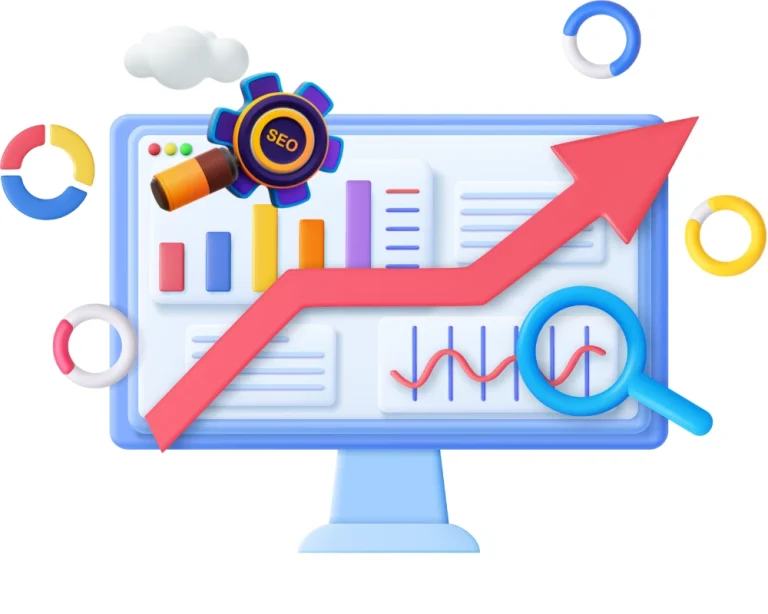
Schema markup — structured code added to a page that explicitly tells search engines what type of content it contains (a review, a recipe, a business address, an FAQ) — increases the chance of earning rich results in search listings, like star ratings or FAQ dropdowns directly in the search results. We implement schema types relevant to the actual page content: LocalBusiness schema for location pages, FAQPage schema for pages with genuine FAQ sections, Product schema for e-commerce listings.
Sites often end up with the same content accessible at multiple URLs — with and without a trailing slash, with tracking parameters, across HTTP and HTTPS versions — which splits ranking signals across duplicates instead of consolidating them onto one authoritative version. We set proper canonical tags pointing to the single preferred URL for each piece of content, resolving this without requiring a full site restructure.
“ Technical SEO from WebSnarks brought results to my site. Search engines are indexing my url's and ranking my pages. Very great work. ”
“ It was very good working with WebSnarks. Work was very smooth and delivered on time. They indexed my site on 2 search engines and my sitemap is working very well. ”
“ Impressed with WebSnarks Technical SEO. They done all necessary work to make my site search engines friendly. Recommended! ”
“ I love the Technical SEO done by WebSnarks. They delivered exactly what I wanted and the process was super easy. Highly recommended. ”
Beyond a responsive theme, we check for mobile-specific technical issues: tap targets sized appropriately for a thumb rather than a mouse cursor, intrusive interstitials (pop-ups) that Google specifically penalizes on mobile, and font sizes that don’t require pinch-zooming to read. A site that looks fine on a desktop preview sometimes has real mobile usability problems that only show up when tested directly on an actual device.
The infrastructure layer of SEO — crawlability, indexing, site speed, structured data, and mobile usability — that determines whether search engines can properly access and understand a site before content or links even get evaluated.
Cost depends on site size and platform — a five-page site audits faster and costs less than a 500-page e-commerce catalog. Share your site for a scoped quote.
Technical SEO covers site infrastructure — crawlability, speed, schema, mobile usability. Our on-page SEO service covers the content and structure on individual pages themselves, like headings and internal links.